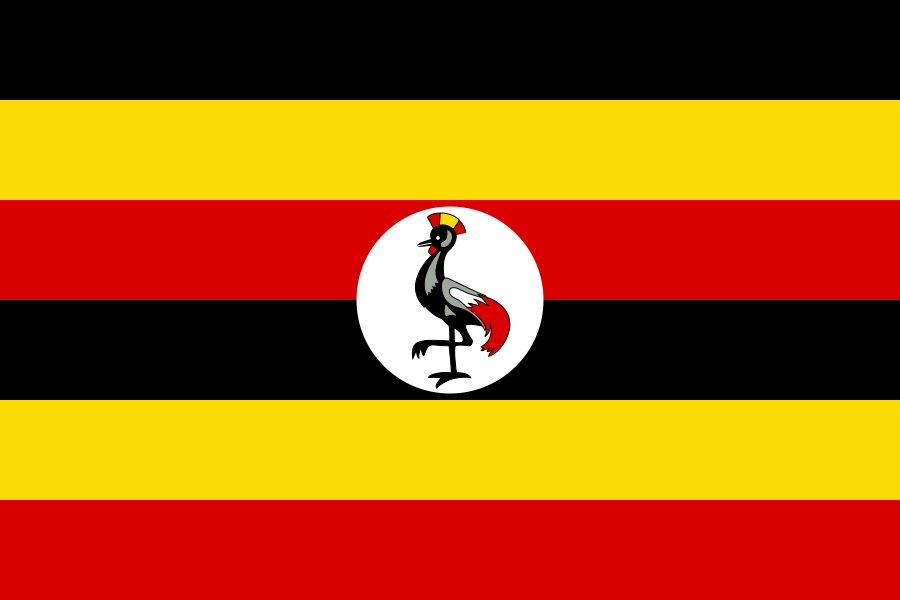
Uganda
Uganda iGaming market in numbers
| Metric | 2025 | 2026 |
|---|---|---|
| Total GGR | $290m | $320m |
| Regulated GGR | $220m | - |
| Offshore GGR | $70m | - |
| Channelization | 76% | - |
| Mobile share | 85% | - |
| YoY growth | - | +10.0% |
| CAGR 2021–2026 | +12% | - |
Regulated and offshore split
Legal status by vertical
Operator's read on Uganda
Uganda is a genuinely open, licensable African betting market, and an operator should read it as a real opportunity that is becoming more margin-sensitive. The National Lotteries and Gaming Regulatory Board licenses a market that is overwhelmingly betting-led and mobile-money-driven, with the large majority of bets placed on mobile and roughly 93% of gaming revenue now online. For the entry mechanics across African markets, the broader licensing picture is in the licences overview. The strategic point is that Uganda is open and mobile-native, but a 2026 tax change is tightening the economics that made it attractive.
The 2026 tax harmonisation raises the cost base. A Lotteries and Gaming amendment harmonises betting and gaming to a single 30% tax rate effective 1 July 2026, which raises betting from 20%, and a separate income-tax amendment introduces a 15% withholding tax on net player winnings. The combination of a 30% gross gaming revenue tax and a 15% player-winnings withholding materially compresses the economics and changes player behaviour at the same time. An operator modelling Uganda on the previous, lighter regime will find the numbers wrong from July 2026, so the current entry case has to start from the new rates.
The central payment gateway removes flow control. Uganda is developing a centralised payment gateway, supervised by the central bank and linked to the revenue authority's platform, that would route all wagers and payouts through one system. For an operator, that means less control over the payment flow and more visibility for the regulator, which is a structural shift in how the business operates. The go-live timing is not yet fixed, but the direction is clear, and it should be built into any entry plan rather than treated as a surprise.
The market is mobile-money-native and betting-led. MTN Mobile Money and Airtel Money are the backbone, with instant, around-the-clock deposits and withdrawals via USSD and apps, and the market is dominated by sports betting rather than casino. That makes mobile-money-native, low-data product design non-negotiable, and it rewards operators who build for micro-stakes and local football content. A casino-first or card-first European product does not fit how Ugandans actually play and pay.
What winning looks like. Winning in Uganda looks like a mobile-money-native, low-data betting product, pricing engineered around the 30% tax and the 15% winnings withholding from July 2026, and a brand built on local football and micro-stakes engagement. The operators who do well, like betPawa with its micro-stakes model, compete on mobile experience and local relevance rather than on the promotional spend that the tax load no longer supports. The offshore leakage in the market signals latent demand but also enforcement risk.
The regional play. Uganda sits in the East African cluster alongside Kenya and Tanzania, all mobile-money-led betting markets where shared infrastructure travels well, and in the broader African growth group with Ghana. How Uganda fits a regional African sequence is part of the multi-market sequencing piece.
The biggest mistake. The biggest mistake is modelling Uganda on the old 20% betting tax and being caught by the 30% harmonised rate and the new 15% winnings withholding from July 2026. The related mistake is porting a casino-first or card-first product into a mobile-money, betting-led market. Build mobile-money-native, price in the full 2026 tax load, and plan for the central payment gateway.
What's changing
Stable framework.
Where these figures come from
- NLGRB 2024
GGR figures are 2025 estimates or actuals where regulator data is available; 2026 projections drawn from the most recent published forecasts. Offshore figures are inherently more uncertain than regulated figures and should be treated as directional. Where reputable sources disagree materially the dataset uses the midpoint of the range.