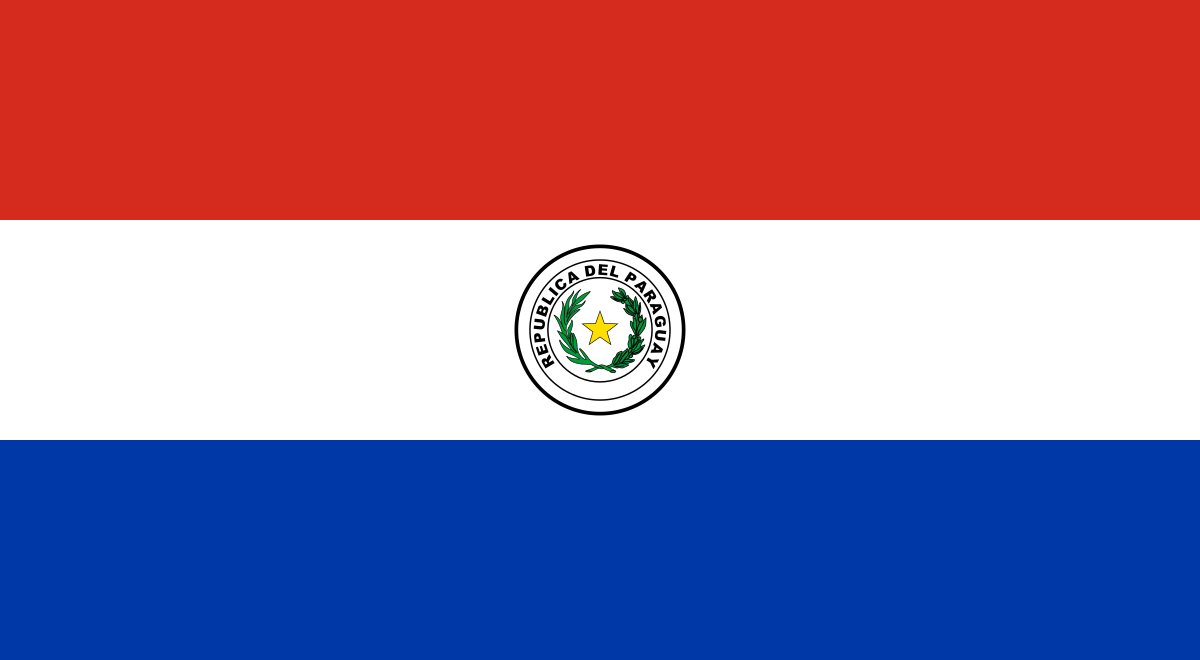
The market
Paraguay overhauled its gambling framework with Ley 7438/2025, promulgated in January 2025, which moved the regulator CONAJZAR under the national tax authority DNIT and replaced the state-monopoly model with a concession model allowing up to three concessionaires per vertical. It is the country’s biggest gambling reform in three decades.
The catch for online is timing. Online sports betting remains the exclusive concession of Daruma SAM, operating as Apostala, under a contract valid until 2028. So while the law now permits competition and recognises online casino as a licensable category, the marquee vertical, sports betting, is still legally locked to one incumbent for now. The market is small and football-led, and offshore operators reach players ahead of a fuller local build.
Regulation and licensing
The regulator is CONAJZAR, now a decentralised gambling body under the DNIT, operating under Ley 7438/2025 and its Decreto 3846/2025. All land-based and online activity runs through state-awarded concessions, with up to three concessionaires permitted per vertical, awarded by public tender. New operators can only enter when DNIT and CONAJZAR open tenders, with the next licensing round scheduled to begin in 2026.
The complication CONAJZAR itself has flagged is Daruma SAM’s sports-betting concession running to 2028: the regulator’s technical-legal team is studying how to open competition without breaching that acquired right, and has floated advancing a tender to add up to two more operators. Online casino is explicitly recognised as licensable under the new law, and the regulator can block unlicensed offshore sites with support from Conatel and the UNA.
Marketing and player rules
The new framework centralises fiscalisation under the tax authority and adds consumer protections for the first time, but detailed advertising, deposit-limit and self-exclusion rules are still being reglamented. On tax, secondary sources indicate a variable concession fee (canon) on revenue plus corporate income tax, with player winnings reportedly taxed, but the online-specific GGR rate could not be confirmed from a primary source. Age limit is 18.
What this means for your plan
Paraguay is a watch, timed to the 2026 tenders. The market is small, so it only makes sense as part of a regional footprint, not a standalone build. The key event is DNIT and CONAJZAR actually opening online tenders and resolving the Daruma exclusivity that runs to 2028; until sports-betting slots open, casino-only entry is the realistic route. I would prepare tender documentation and watch the DNIT portal, but I would not over-invest before the licensing round is live and the tax terms are confirmed in the decree.
Sources
- DNIT, portal institucional, apuestas deportivas y documentos de la Ley 1016/97, checked 5 September 2026
- Yogonet, Conajzar y la Ley 7438, traspaso a DNIT y fin del monopolio, checked 5 September 2026
- Focus Gaming News, Conajzar estudia licitar de nuevo las apuestas deportivas, checked 5 September 2026