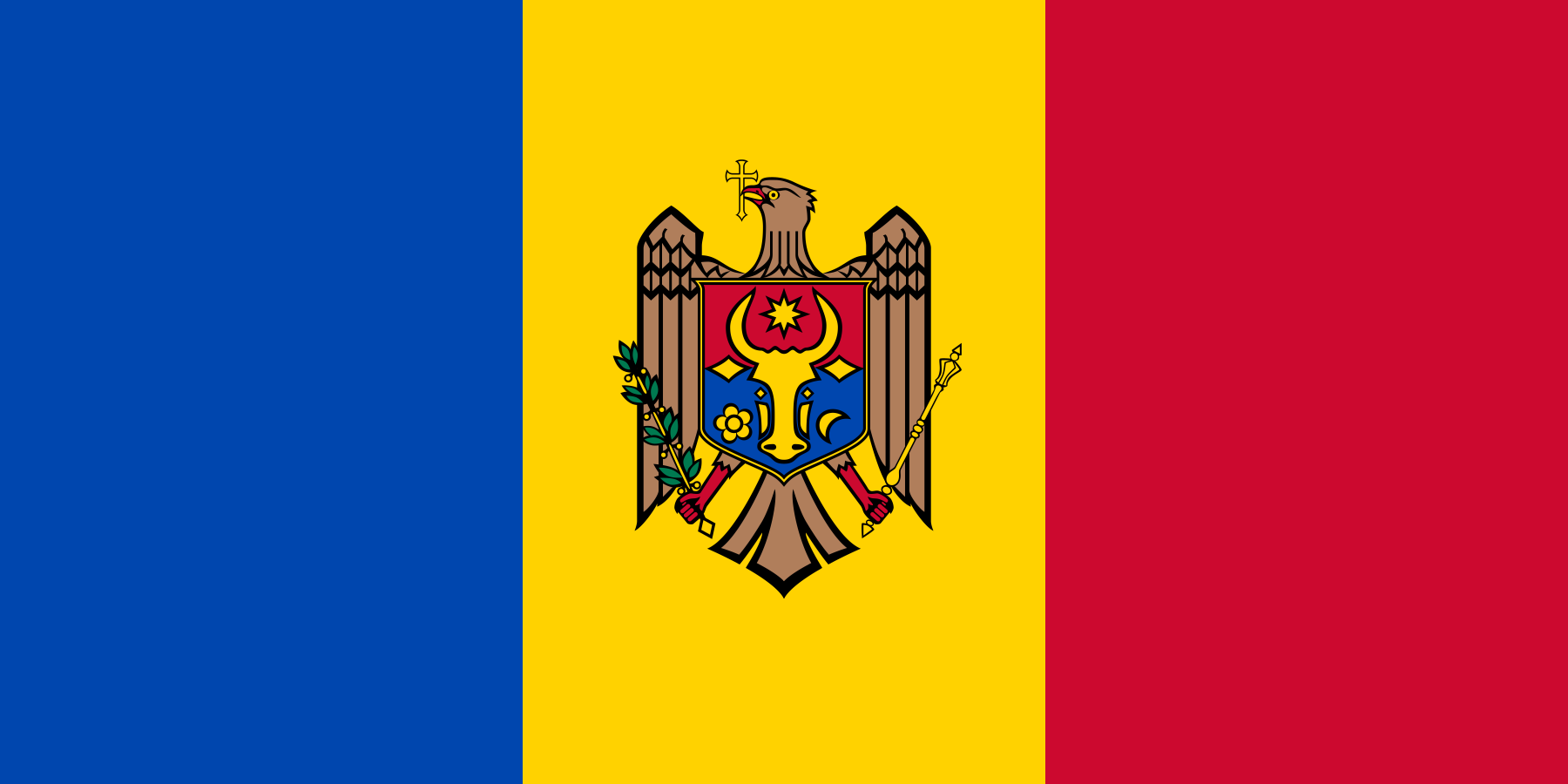
Moldova
Moldova iGaming market in numbers
| Metric | 2025 | 2026 |
|---|---|---|
| Total GGR | $260m | $290m |
| Regulated GGR | $30m | - |
| Offshore GGR | $230m | - |
| Channelization | 12% | - |
| Mobile share | 75% | - |
| YoY growth | - | +12.0% |
| CAGR 2021–2026 | +9% | - |
Regulated and offshore split
Legal status by vertical
Operator's read on Moldova
Moldova is a state-monopoly market where the only legal route for a foreign operator is a partnership with the national lottery, and an operator should read it on those terms. A 2016 law expanded the state monopoly to cover lotteries, sports betting, slot halls and all online gambling, and the national lottery has run that monopoly since 2017 as the only licensed online provider. The strategic point is that independent B2C licensing is not possible, so entry has to be structured as supply to the monopoly.
The monopoly covers all online gambling. Because the 2016 law extended the state monopoly to online, the national lottery is the sole legal online provider, and a foreign operator cannot hold its own online licence. For an operator, that means the open-market entry available in many countries does not exist here, and the only legal participation is through the monopoly rather than alongside it.
The route in is a partnership with the monopoly. Foreign operators can participate via partnership with the national lottery, as an established international supplier did in early 2025 when it launched through such an arrangement. So the realistic structure is a B2B, content or platform partnership with the monopoly rather than an independent consumer brand. An operator that wants exposure to Moldova has to think in supplier terms, identifying where the monopoly needs capability it can provide.
The environment is tightening on offshore play. Moldova has brought in stricter land-based identification and continued crackdowns on illegal and offshore operators, often Russian-linked, while a draft to ease the gambling-advertising ban for lower-risk verticals has had a first reading. For an operator, the enforcement against offshore play reinforces that the monopoly-partnership route is the only viable one, while the advertising bill is a signal worth watching for any broader softening.
What winning looks like. Winning in Moldova looks like a B2B or platform partnership with the national lottery monopoly, supplying capability the state operator needs, rather than any attempt at independent B2C entry. The operators who get value from Moldova structure it as supplier-to-monopoly and watch the advertising-liberalisation bill for signs of a wider opening.
The regional play. Moldova sits among the smaller Eastern European markets near the regulated, open Ukraine, which offers a genuine licensing route by contrast. How a monopoly-partnership market fits a regional sequence is part of the multi-market sequencing piece.
The biggest mistake. The biggest mistake is planning an independent B2C entry into Moldova when all online gambling is a state monopoly and only the national lottery is licensed. The related mistake is missing that the only legal route is a partnership with the monopoly. Structure any Moldova entry as supplier-to-monopoly, and look to Ukraine for a genuinely open regional market.
What's changing
State monopoly only domestically; crackdowns intensifying late 2025.
Where these figures come from
- Slotegrator 2026
GGR figures are 2025 estimates or actuals where regulator data is available; 2026 projections drawn from the most recent published forecasts. Offshore figures are inherently more uncertain than regulated figures and should be treated as directional. Where reputable sources disagree materially the dataset uses the midpoint of the range.