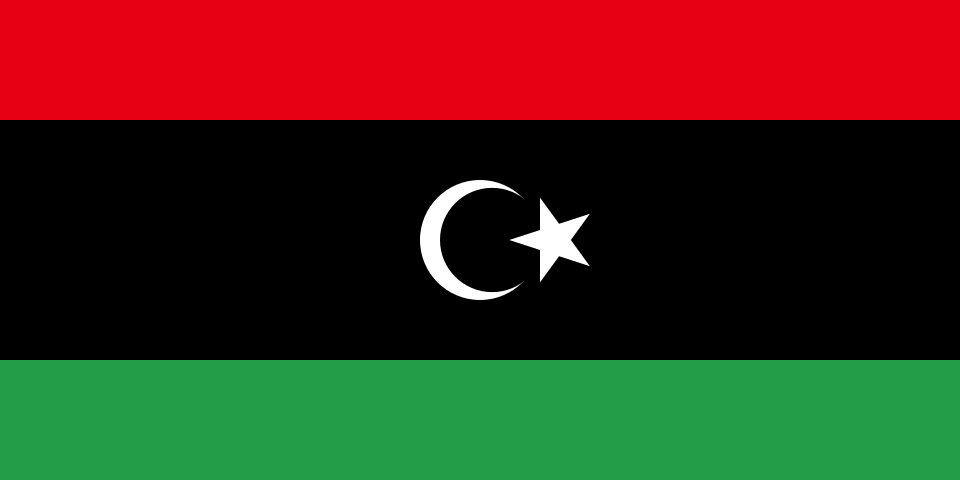
Libya
Libya iGaming market in numbers
| Metric | 2025 | 2026 |
|---|---|---|
| Total GGR | $100m | $110m |
| Regulated GGR | $0m | - |
| Offshore GGR | $100m | - |
| Channelization | 0% | - |
| Mobile share | 75% | - |
| YoY growth | - | +10.0% |
| CAGR 2021–2026 | - | - |
Regulated and offshore split
Legal status by vertical
Operator's read on Libya
Libya is a fully closed, conflict-affected prohibition market, and an operator should read it as having no entry case. All gambling is prohibited under the penal code, online gambling is explicitly outlawed under a 2022 cybercrime law carrying significant imprisonment and fines, and the prohibition rests on both criminal law and Sharia. Political fragmentation and instability compound the closure. The strategic point is that Libya offers no regulator, no licensing pathway and no realistic prospect of reform, so it should be excluded from any actionable pipeline.
Prohibition is explicit and criminal. Libya's penal code bans gambling, and a 2022 cybercrime law explicitly outlaws online gambling with imprisonment of at least two years plus fines for operating. For an operator, that means online gambling is not a grey area but an explicitly criminalised activity, with no regulator and no licensing pathway for any vertical, so there is nothing to apply for and serious legal exposure for anyone operating.
Conflict and instability compound the closure. Libya remains affected by political fragmentation and instability, which undermines any enforcement consistency and any near-term reform prospect. For an operator, that means even setting aside the explicit prohibition, the country is not a place where a stable, legitimate operation could function, so the instability reinforces the legal closure. There is no functioning environment for a regulated market.
Offshore access carries real risk. Offshore sites are reachable but illegal for both users and operators, and the explicit 2022 cybercrime prohibition means serving the market carries clear legal and reputational risk. For an operator, that means the offshore route is not a viable workaround, because the law specifically criminalises online gambling and the unstable environment adds further hazard. There is no safe way to engage the market.
What the honest read is. Libya is fully closed and high-risk, with no entry case, no regulator and no realistic reform prospect. The right posture is to exclude Libya from any actionable pipeline and to exclude Libyan traffic from a licensed operation, because both the explicit prohibition and the instability make it impossible to serve compliantly.
The regional play. Libya sits among the North African prohibition markets near Algeria, both closed, and far from any licensable opportunity. How a fully closed, conflict-affected market fits a regional view is part of the multi-market sequencing piece.
The biggest mistake. The biggest mistake is treating any offshore demand in Libya as an opportunity, when online gambling is explicitly criminalised under the 2022 cybercrime law and the country is conflict-affected. The related mistake is any contact with the market that creates legal or reputational exposure. Exclude Libya entirely, and focus on licensable markets.
What's changing
Conflict-related uncertainty.
Where these figures come from
- Statista regional
GGR figures are 2025 estimates or actuals where regulator data is available; 2026 projections drawn from the most recent published forecasts. Offshore figures are inherently more uncertain than regulated figures and should be treated as directional. Where reputable sources disagree materially the dataset uses the midpoint of the range.